

High-profile enterprise network outages have pushed business continuity from “nice to have” to board-level concern. Whether its fibre cuts, extreme weather, or geopolitical risks, enterprises are rethinking connectivity architectures around connectivity models rather than access technology, because the biggest risk is losing sites and apps when a single fibre-centric design fails, not whether the last mile is fibre or 5G. Now, with cellular technologies reaching fixed-line-broadband levels of competitiveness, enterprises are increasingly using a mix of fibre, cable, and Ethernet in their infrastructure, making solutions like managed Fixed Wireless Access (FWA) attractive as a service-led evolution of self-managed FWA.
What is Managed Fixed Wireless Access (FWA)?

Fixed Wireless Access (FWA) has emerged as a viable alternative to historical last-mile connectivity options like fibre Ethernet, especially since 5G FWA is fixed-line-broadband-comparable for general business, availability-focused, and rapid-deployment use cases, delivering internet access over cellular networks.
Managed FWA is an evolution of FWA, delivered as connectivity-as-a-service, where deployment, operation, and maintenance of the end user equipment and infrastructure are handled by a specialist third-party.
Managed FWA has emerged as the most attractive way to add a diverse, SLA-backed primary-ready or backup network (depending on location and application requirements) that can be deployed in days, is physically separate from the fixed-line access network and is easy to orchestrate for disaster recovery.
For a comprehensive overview of FWA, check out our 5G Fixed Wireless Access (FWA) Complete Beginner’s Guide.
How is managed FWA different from unmanaged or DIY FWA?
As with all managed services, the key difference is that managing the infrastructure yourself, or taking a DIY approach, introduces operational limitations in terms of technical knowledge, resources, and time spent maintaining or fixing the network. A fully managed service on the other hand, introduces specialist resources backed by SLAs that keep critical services such as payments, core business applications, clinical, or logistics systems online.
Fundamentally, advanced managed enterprise FWA offerings bundle the radio access with network monitoring, SLAs, and SD‑WAN or router integration, turning it into a turnkey resilience connectivity asset rather than a best-effort backup.
In many self-managed FWA approaches, the wireless link is considered second-tier broadband, for emergency use only. But a well-managed FWA approach can actually standardize operational responsibility, monitoring and recovery processes for the infrastructure.
Instead of struggling with fragmented support and accountability, managed FWA introduces better and more reliable performance with network path independence, when delivered with multi-core network cellular connectivity, allowing enterprises to use different mobile operators and their respective access networks to avoid common points of failure.
When connecting to a third-party large scale and international network, FWA connections are exposed into centralized portals though SD‑WAN capabilities, and appear as ‘just another link’, with logically defined QoS, usage, and health metrics, much as you would expect with point-to-point Ethernet.
What are the key benefits of managed FWA?
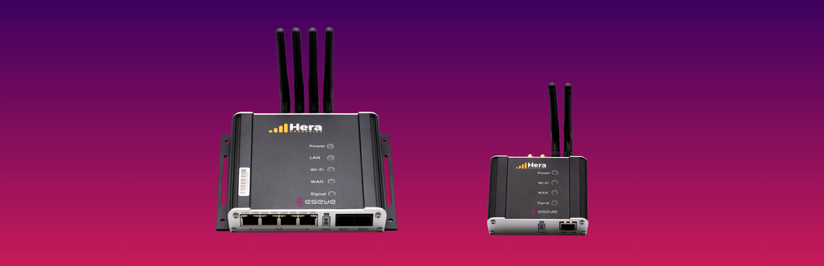
Managed FWA offers a scalable and affordable alternative to business using fixed-line broadband deployments, which have long lead times, single-carrier risk, and limited resilience, and also overcomes the knowledge and resource gaps common in a DIY approach.
Plug-and-play simplicity
Fully managed CPE, like routers, comes preconfigured with zero-touch activation. You just power up and go. Routers can even be pre-configured to optimally support business internet or specific IoT applications, depending on the capabilities of the managed service provider.
Fully managed device lifecycle
End-to-end device management, including over-the-air firmware updates, keeps devices protected and reduces downtime. Your service provider will also handle end-of-life upgrades and equipment failures.
Global, always-on connectivity
One of the most challenging aspects of self-managing cellular connectivity is all of the accounts, contracts, SIMs, and relationships with mobile network operators. A managed service will take care of those relationships for you, and should also give you access to a wide-range of MNO partners to ensure global, uninterrupted service, via a single contract and a management platform.
Management platform
By extension of the point above, a management platform also streamlines procurement and support for device management and connectivity. This means predictable costs, fewer suppliers, and consistent service, making connectivity across sites faster and simpler.
Self-healing resilience
Because managed service providers operate on behalf of multiple enterprise clients, they invest in state-of-the-art infrastructure management, like device health monitoring with automated recovery mechanisms, including network switching, interface resets and remote reprovisioning. This proactive, intelligent device monitoring capabilities including heartbeat checks to keep your equipment online, secure, and optimized and self-heal in the event of equipment or network failure.
When does managed FWA make sense for enterprise connectivity?
There are several key benefits to managed FWA, including:
- Rapid, predictable deployment
Cellular receivers can be installed and optimized for a 4G/5G cell in days, even in underserved or new-build areas.
- Carrier and path independence
Enterprises can use different mobile operators, with multiple SIMs or eSIMs in the router, avoiding common-mode failure.
- Integrated management
FWA links are exposed into centralized portals and leverage SD‑WAN to appear as just another network route with policy-based QoS, data usage, and health metrics.
As a result, many enterprises now specify one wired and one managed FWA link per critical site as a standard network blueprint for primary-plus-backup connectivity and Disaster Recovery (DR), rather than incrementally tweaking individual access technologies. This is testament to the confidence in FWA as a fixed-line-broadband-competitive option for many enterprise internet and resilience-focused use cases, rather than a universal replacement for fibre.
Situations where managed FWA is a strong fit:
Distributed or multi-site enterprises
Businesses deploying FWA across multiple sites will find that, unlike fibre, each cell site is different and requires some ‘know how’ when it comes to installation and line-of-sight from the CPE to the base station. This is where your managed service provider demonstrates their value. And in terms of deployment speed for FWA, nothing else compares as you’re looking at hours versus weeks or months.
Time-critical deployments
The main benefit of FWA is there is no need to dig fibre or get planning permission. You just plug in the router and go. With a fully managed FWA service, the router is even pre-configured with zero-touch provisioning, enabling connectivity out-of-the-box.
Environments where uptime and governance matter
The multi-IMSI capabilities available in advanced FWA routers give you much more flexibility than a fixed-line alternative. If the fibre breaks or there is a problem in the exchange, it doesn’t matter who your service provider is, they’re all disrupted. But with a cellular connection, it's possible to switch between MNOs with completely different networks, making FWA attractive as a backup as well as a primary link.
Enterprises with limited internal resources
Managing sprawling enterprise networks is resource intensive and introducing cellular connectivity can increase that burden. For enterprises that want to scale quickly, a knowledgeable partner can make it happen with a managed FWA approach.
There are always cases where FWA is not appropriate as a replacement for fibre, such as some financial applications like stock trading, which rely on the ultra-low latency of fibre. However, with the advent of 5G, FWA is now considered a fixed-line-broadband-competitive alternative and is certainly an ideal complementary technology for applications requiring fibre-like connectivity.
What enterprise use cases benefit most from managed FWA?

Multi-site retail and hospitality
Retail stores, kiosks and pop-ups, fast food restaurants, petrol and service stations can benefit from managed FWA for Point of Sale (POS) and payments continuity, guest WiFi, and retail IoT applications like digital signage, HVAC, and refrigeration monitoring, where uptime and fast rollout are directly tied to revenue and customer experience.
Logistics, warehousing, and industrial estates
Warehouses, storage depots, distribution centres, and light industrial environments can use managed FWA for warehouse scanning devices, IoT-enabled CCTV, access control and building management, telematics gateways, robotics, and vehicle tracking, particularly where fixed connectivity is delayed, unavailable or operationally inconsistent.
Construction, mining, and temporary infrastructure
Construction projects and mining operations both have a need for day-one connectivity. These are typically remote sites with a high site churn, making managed FWA well-matched for use cases like site offices, CCTV, IoT worker welfare and safety systems, telemetry, and other forms of remote monitoring.
EV charging
Electric vehicle charging sites are frequently in locations with poor fixed connectivity, and uptime directly impacts revenue and customer experience as it is responsible for payments, charging point occupancy, and even electric grid management. Managed FWA can provide IoT-enabled charger management system backhaul, payment authorization, remote monitoring, and digital signage.
Healthcare and community sites
Multiple sites frequently need for rapid rollout for clinics and temporary facilities. In healthcare there is a need for satellite sites with zero downtime tolerance, and revenue-critical connectivity. Managed FWA can act as primary and/or backup for core connectivity, connectivity for temporary clinics, IoT-enabled remote diagnostics kiosks, and guest/patient WiFi segregation.
Smart city municipalities and utilities
In a smart city, there is a need to connect everything from individual buildings, to entire campuses for schools and municipal management, as well as a wide range of infrastructure from traffic control systems through to environmental monitoring sensors and various components of the water, gas, and electrical grids. Managed FWA can deliver comprehensive connectivity without the need for physical disruption and digging up streets.
Why is managed FWA becoming part of enterprise network strategy?
When considering the most likely single points of failure in enterprise WAN design, fibre links are at the top, as centralized internet breakouts can easily strand remote sites when a hub or cloud region fails. This has resulted in growing demand for fast, resilient primary-ready and back-up connectivity for enterprises including branch offices, retail locations, and disaster recovery in general, and increased the focus on managed FWA as an effective solution to close the gap between wireless capability and enterprise operational readiness.
Couple this with the shift toward service-based networking models for both fixed and wireless connectivity, and you see how managed FWA can reduce operational burden and deliver faster time-to-value for businesses eager to scale quickly and without increasing technical complexity or operational risk.
Download the HeraConnect Fixed Wireless Access
Managed Service solution paper to learn more.

Eseye brings decades of end-to-end expertise to integrate and optimise IoT connectivity delivering near 100% uptime. From idea to implementation and beyond, we deliver lasting value from IoT. Nobody does IoT better.
HeraConnect
Fixed Wireless Access (FWA) Managed Service
In this article
- What is Managed Fixed Wireless Access (FWA)?
- How is managed FWA different from unmanaged or DIY FWA?
- What are the key benefits of managed FWA?
- When does managed FWA make sense for enterprise connectivity?
- What enterprise use cases benefit most from managed FWA?
- Why is managed FWA becoming part of enterprise network strategy?